
Benefits of Gymnastics Training with Equipment: Building Strength, Control, and Confidence
7 Mins Read

Last updated on July 17, 2026
Gymnastics is one of the most comprehensive forms of athletic development available. While it is often associated with flexibility and artistic routines, the reality is that gymnastics training builds strength, power, coordination, balance, and mental discipline in a uniquely integrated way. When athletes train using properly designed gymnastics equipment, those benefits are amplified through consistent, repeatable movement patterns that reinforce correct technique.
Unlike many sports that isolate physical qualities, gymnastics requires the entire body to work as a coordinated system. Every jump, hold, swing, or landing demands strength, joint stability, spatial awareness, and precise control. Training regularly on reliable equipment allows athletes to refine these qualities safely. For families looking to support progress outside the gym, investing in high-quality gymnastics equipment creates an environment where structured skill development can continue at home.
Why Equipment Quality Directly Affects Performance
In gymnastics, consistency is everything. Athletes depend on predictable surfaces and stable apparatus to refine timing and technique. If the equipment behaves differently from one session to the next, the athlete’s motor patterns can be disrupted. Over time, this inconsistency may lead not only to stalled progress but also to increased injury risk.
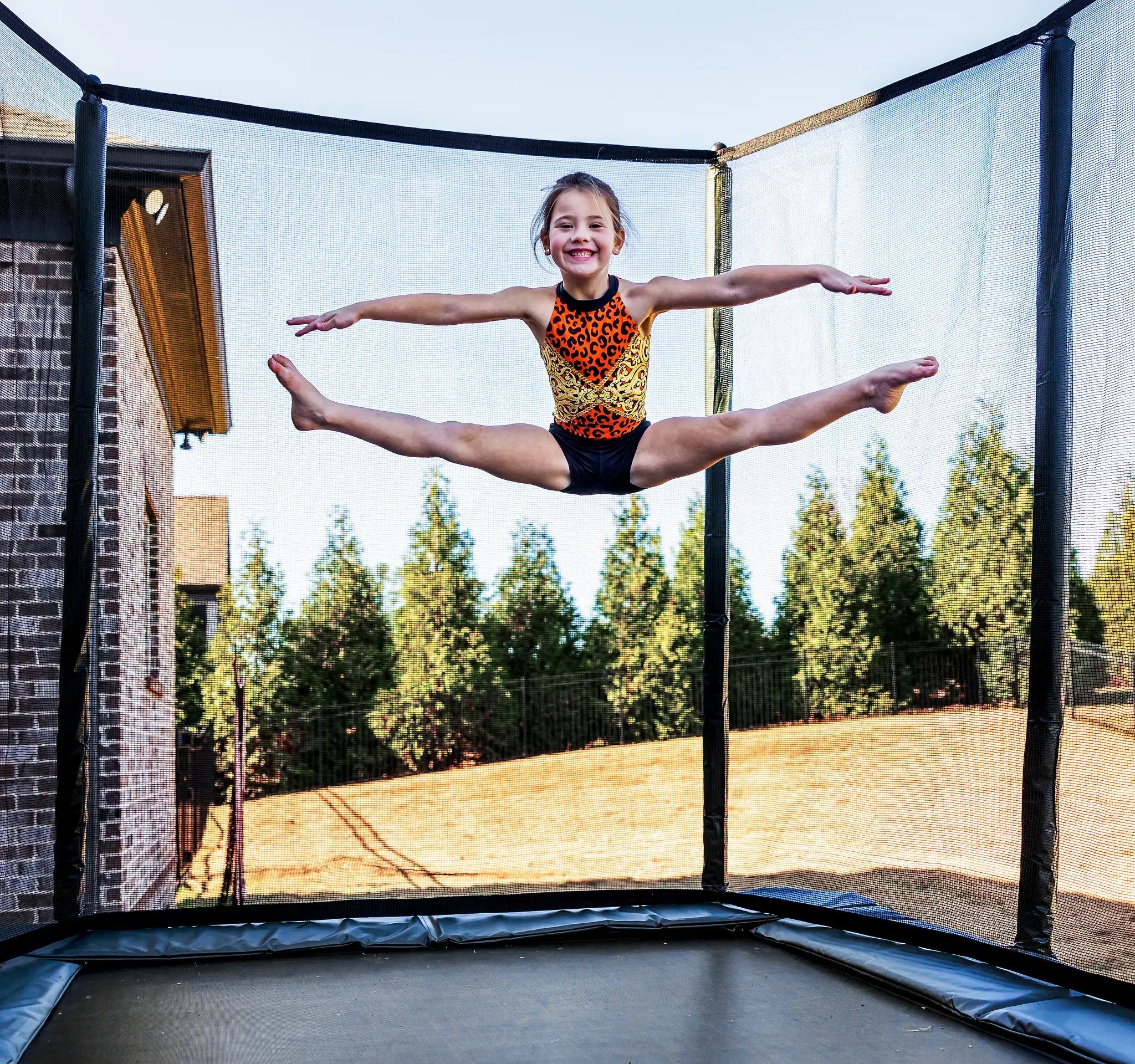
A well-engineered trampoline, for example, provides even rebound across the entire jumping surface. This allows the athlete to develop reliable air awareness and landing mechanics. In contrast, recreational trampolines that create “dead spots” or uneven bounce can interfere with rhythm and control. The same principle applies to mats. High-density foam that maintains its structure under repeated impact helps absorb landing forces effectively, protecting joints and reinforcing confident movement.
Durability is equally important. Equipment that degrades quickly forces athletes to adapt to changing performance characteristics. Professional-grade construction ensures that the training environment remains stable and dependable over time, which is essential for skill progression.
Essential Safety Equipment Used in Gymnastics
Safety infrastructure forms the foundation of any gymnastics setup. Before adding advanced apparatus, athletes should have reliable protective surfaces in place.
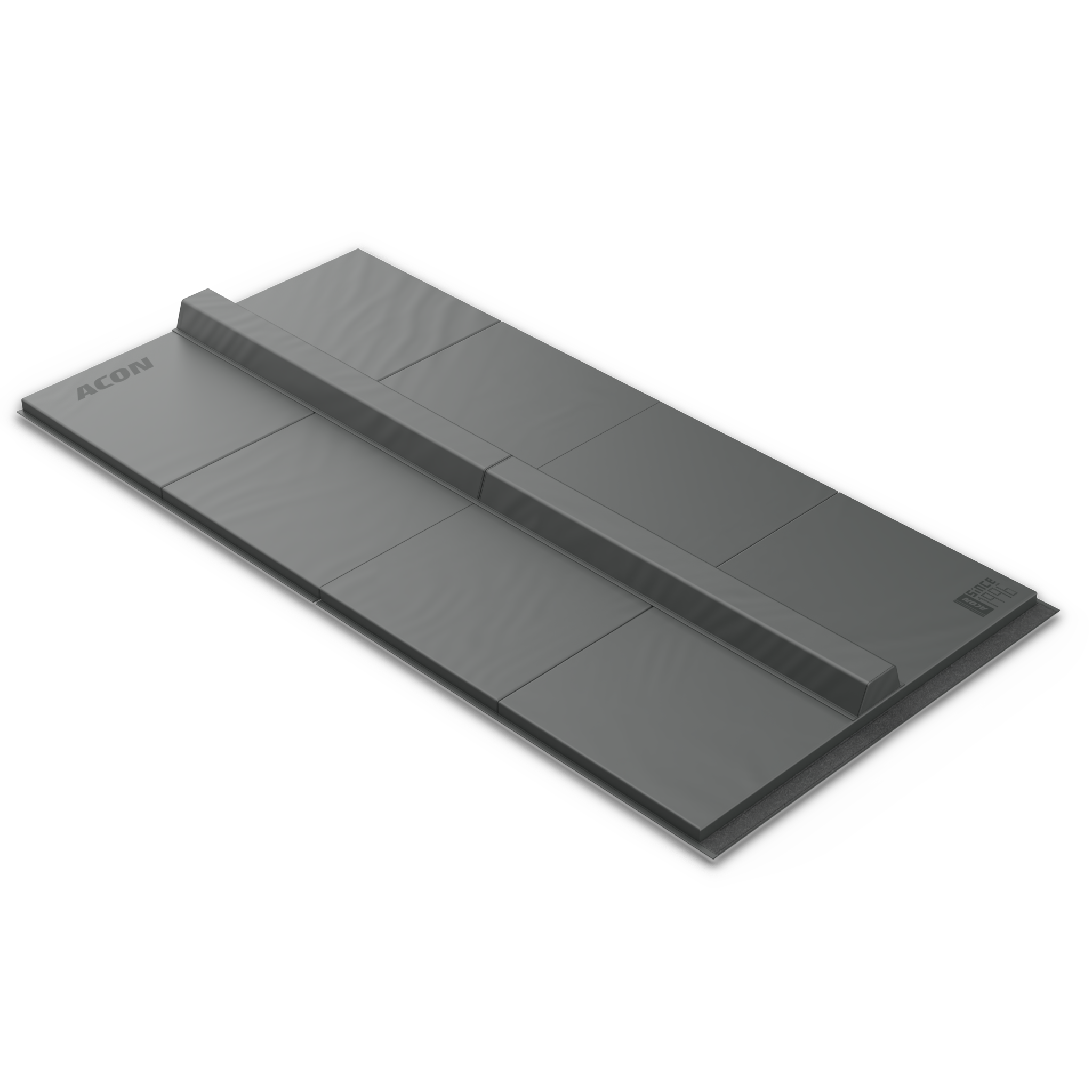
Gymnastics mats offer this protection. Quality mats cushion landings and reduce stress on ankles, knees, and wrists. The foam should be firm enough to prevent bottoming out while still providing meaningful shock absorption. Durable covers and secure seams are equally important, as tearing or shifting material can create unexpected hazards.
Trampolines used for skill development must also incorporate thoughtful safety design. A stable frame, secure padding over springs, and a properly tensioned enclosure system all contribute to reducing risk. Equipment engineered as a cohesive system performs more reliably than products assembled from loosely integrated components.
Airtracks offer an additional layer of versatility. By adjusting air pressure, athletes can modify surface firmness to match their level of development. Softer settings provide forgiveness during early progressions, while firmer settings more closely replicate competition surfaces. Crash mats are particularly important when learning new aerial elements or practicing dismounts, as they significantly reduce impact forces during the skill acquisition phase.
Gymnastics Training Compared to Traditional Weightlifting
Traditional weightlifting and gymnastics training both build strength, but they do so in fundamentally different ways. Weightlifting often isolates muscle groups and operates within fixed movement patterns. This approach is effective for increasing muscular size and targeted force production, yet it may not always translate seamlessly into dynamic, multi-planar athletic movements.
Gymnastics apparatus training requires the body to stabilize itself while moving through space. Whether holding a support position or executing a tumbling pass, the athlete must coordinate multiple joints simultaneously while controlling momentum. This develops integrated strength and active mobility rather than isolated muscle capacity.
For many athletes, a combined approach is ideal. Gymnastics training enhances coordination, joint integrity, and body control, while supplemental resistance training can address specific strength deficits. The two methods can complement one another when programmed thoughtfully.

Building a Safe and Effective Home Gymnastics Setup
Creating a productive home training environment begins with clear goals. The needs of a recreational athlete differ from those of a competitive gymnast preparing for advanced skills. Once goals are established, the available space should be measured carefully, including overhead clearance. Vertical space is particularly important when incorporating trampoline work or aerial elements.
Safety should always be prioritized before expanding the setup. Mats and landing zones should be arranged to protect likely fall paths, and there should be sufficient clearance around every apparatus. It is better to begin with a modest but well-protected space than to overcrowd the area with equipment that compromises safety.
When selecting equipment, long-term progression should be considered. Athletes often advance more quickly than expected. Choosing apparatus that can support higher skill levels helps avoid frequent replacement and ensures that performance characteristics remain appropriate as the athlete grows.
When It Is Time to Upgrade or Replace Equipment
Over time, even well-made equipment will show signs of wear. Uneven trampoline rebound, permanently compressed mats, visible corrosion on metal frames, or loosened structural components all indicate that maintenance or replacement may be necessary. Equipment should also be reassessed when an athlete increases significantly in size, strength, or skill level.
Proactively upgrading equipment is not merely a performance decision; it is a safety responsibility. Consistent evaluation ensures that the training environment remains supportive rather than limiting.

The Long-Term Value of Professional-Grade Equipment
Although recreational equipment may appear cost-effective initially, frequent replacement and inconsistent performance often offset those savings. Professional-grade gymnastics equipment is designed to maintain structural integrity and performance characteristics over extended periods of use. For athletes who train consistently, that reliability supports steady progress and reduces risk.
Families committed to serious training at home can explore Acon’s full gymnastics collection.
Gymnastics Training Insights: Common Queries
What is the ideal age to start using specialized gymnastics equipment for strength training?
There is no single “perfect” age to introduce specialized gymnastics equipment, as readiness depends more on physical coordination and supervision than on a specific number. Many children begin basic gymnastics movements as early as ages five or six, focusing on balance, coordination, and body awareness rather than formal strength development. At this stage, equipment should be scaled appropriately and used under adult or coach supervision.
More structured strength-oriented apparatus work, such as consistent bar drills or ring progressions, often becomes appropriate between ages eight and ten. By this time, most children have developed improved neuromuscular control and can follow technical instruction more consistently. The emphasis should always remain on gradual progression and proper form rather than pushing difficulty too quickly. With safe surfaces, quality mats, and appropriately engineered equipment, young athletes can build strength in a way that supports healthy long-term development.
Do you need to be flexible before starting gymnastics equipment training?
Flexibility is often seen as a prerequisite for gymnastics, but in reality, it develops alongside strength and coordination. Athletes do not need advanced flexibility to begin working on bars, trampolines, or airtracks. What is more important is learning controlled movement patterns and maintaining proper alignment.
In fact, gymnastics training itself improves functional flexibility. As athletes move through full ranges of motion under control, muscles and connective tissues adapt gradually. This type of active flexibility is often more beneficial than passive stretching alone because it strengthens the body within the newly gained range. Beginners should start conservatively, prioritize clean technique, and allow flexibility to develop progressively rather than forcing range prematurely.
How does gymnastics equipment training compare to traditional weightlifting for building lean muscle?
Gymnastics equipment training and traditional weightlifting can both build lean muscle effectively, but they stimulate the body in different ways. Weightlifting typically allows for measurable, progressive overload using external resistance. This makes it efficient for targeting specific muscle groups and increasing muscle size.
Gymnastics training, on the other hand, relies primarily on bodyweight resistance and leverage. Because athletes must stabilize themselves through dynamic movements, smaller stabilizing muscles and connective tissues are recruited more consistently. This often results in balanced muscular development and strong joint integrity. Rather than isolating muscles, gymnastics integrates them into coordinated patterns.
For many athletes, the most effective strategy combines both approaches. Gymnastics equipment training develops coordination, control, and functional strength, while supplemental resistance work can address specific strength limitations. Together, they support sustainable muscle development and athletic performance.